


Parkinson's disease is a progressive neurodegenerative disease. It currently affects 4 million people worldwide. Uncontrollable movements, tremors and jerky movements, blocked, stiff and frozen sensations throughout the body, difficulties writing or moving - all of these symptoms are characteristic of the disease.
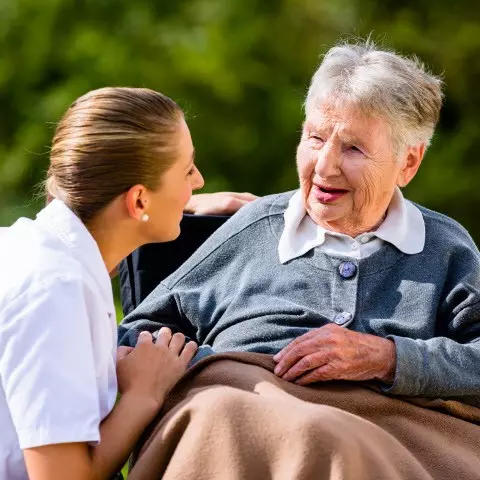 Having a loved one with Parkinson's disease takes its toll on all levels. Physically and psychologically, the caregiver’s ability to cope is put to the test every day. Moreover, Parkinson's patients sometimes tend to get depressed on realising the limitations imposed by their disease. Often anxious, they withdraw into themselves and refuse to communicate. This is a very difficult situation for friends and family. There are several associations such as France Parkinson that specialise in the support and training of caregivers. Their goal is to provide the latter with all the information they need to look after these patients. Nevertheless, caregivers can still feel overwhelmed as the disease progresses.
Once a diagnosis has been made, the caregiver must initially discuss the role they will play in caring for the affected individual. The person with Parkinson’s disease will make the decisions but the caregiver must offer support when needed. This commitment will change as the disease progresses.
Ask questions regarding retirement homes to our experts
Although the patient’s friends and family are very dedicated, they may have problems in adopting the right approach to this condition as the patient's reactions can be difficult to manage. Moreover, mood swings and behavioural changes can trigger anxiety, resulting in a refusal to communicate. This can inflame an already difficult situation.
What approach should you adopt for a patient with Parkinson’s disease?
Here are five practical tips for caregivers:
- Lend a listening ear: explain, listen and ask for the opinion of the person you are helping. This shows that you respect their independence and are encouraging their involvement.
- Help the patient to maintain their independence: the patient should be allowed to perform as many activities as possible but their continued safety should always be uppermost. It is advisable to balance the amount of assistance given to ensure that it is adequate. However, this does not mean that you should do everything for the patient.
- Adapt to the illness and disability: it is important to stay in regular contact with the doctors treating your loved one to ensure that you are familiar with their physical and mental symptoms and can meet essential needs.
- Take time out and give yourself a break: you must also look after yourself – this is essential. Taking time to recharge your batteries will allow you to deliver optimum care to your loved one.
- Share problems with friends and family: it is important to rely on those around you. Do not hesitate to call on your family, friends, neighbours or day care centres to avoid carrying the burden of responsibility alone. Belonging to a support network allows you to share your experiences and find solutions.
What are the limits of home care for individuals with Parkinson's disease?
When an elderly loved one's condition progresses to a point where constant assistance and care are needed, the caregiver often makes a wise decision in turning to a residential facility capable of meeting the needs of patients with Parkinson’s disease. Fortunately, a number of facilities cater for elderly individuals with this condition. Every day, Retirement Home Plus elderly care advisors are contacted by families in search of a retirement home that meets stringent requirements. Every request is dealt with promptly, including emergency requests. Searches are carried out to find quality facilities appropriately equipped to welcome and take care of Parkinson's patients both medically and socially, regardless of their condition, level of dependence, region, or budget.
| Care Strategy | How It Helps |
|---|---|
| Create a Care Schedule | Divides daily responsibilities between family members and caregivers. |
| Use Respite Care | Provides temporary relief when the main caregiver needs a break. |
| Coordinate With Professionals | Helps families adapt support as Parkinson’s symptoms change. |
| Build a Support Network | Reduces reliance on a single caregiver for everyday assistance. |
Don't hesitate to contact us at 343 309 5289. We can help you choose the right establishment for you and assist you in your search.
Yes, many people with Parkinson's disease can continue living at home, particularly during the earlier stages of the condition. The ability to remain independent depends on symptoms, mobility, cognitive health, home safety and the amount of support available from family members, caregivers and healthcare professionals.
There is no fixed timeline for independent living with Parkinson's disease because the condition progresses differently for each person. Some individuals remain independent for many years, while others require assistance sooner because of mobility problems, falls, cognitive changes or difficulties completing daily activities.
A person with Parkinson's may eventually need help with activities such as bathing, dressing, preparing meals, managing medications, shopping and household tasks. Physical therapy, occupational therapy and professional home care may also help support mobility, safety and independence.
Home modifications can help reduce the risk of falls and make everyday activities easier. Removing trip hazards, improving lighting, installing grab bars, using non-slip surfaces and creating clear walking paths are common safety measures. An occupational therapist can also assess the home and recommend adaptations based on the person's individual needs.
Some people with advanced Parkinson's can remain at home when sufficient professional and family support is available. However, increasing mobility problems, frequent falls, cognitive changes or the need for extensive assistance with daily activities can make home care more complex.
Some people with mild Parkinson's disease can live alone safely, but their situation should be regularly reassessed as symptoms change. Falls, medication difficulties, mobility limitations and cognitive changes may eventually make living alone unsafe without additional support.
Frequent falls, difficulty getting around the home, missed medications, problems preparing food, declining personal hygiene and increasing confusion may indicate that additional support is necessary. Families should also consider whether the person can respond appropriately to an emergency when alone.
Senior living may be considered when Parkinson's symptoms make everyday life difficult or unsafe despite home care and adaptations. Increasing assistance needs, recurrent falls, medication management difficulties, caregiver exhaustion or cognitive decline may indicate that a more supportive living environment should be explored.
The appropriate type of senior living depends on the person's level of independence and care needs. Some people may benefit from assisted living or a retirement residence, while those with advanced mobility, medical or cognitive needs may require a setting that provides more comprehensive nursing and personal care.
Caring for a loved one with Parkinson's disease can be physically and emotionally demanding, especially as the condition progresses and causes anxiety, depression, mood changes, or withdrawal. Caregivers should support the person's independence while adapting their assistance to changing needs. Good communication, regular contact with healthcare professionals, personal breaks, and support from family and community networks can make caregiving more manageable. However, when Parkinson's disease progresses to a point where constant assistance is required, residential care may provide a safer and more appropriate environment with specialized medical and social support.

Find a suitable senior residence
